Recovery from Social and Performance Anxiety
and Related Conditions
Robert F Mullen, PhD
Director/ReChanneling
For each new subscriber, ReChanneling donates $25 for workshop scholarships.

_____________________________________________________
Events
September 2026:Guest Blog– Wild Ink Publishing
October 22, 2026: 1,000 readers in Wanstead, EnglandOctober 23, 2026: Conversation with Ari ShapiroNovember 11: 1952 readers in Pasadena November 23, 2026: The Bobby Jones Show; TN & NJ
November 24, 2026: 1,200 readers in Branford, CT.
January 14, 2026: 1,800 readers in St. Paul, MN
January TBD: 3,200 readers in London
TBD: 1767 readers in Liverpool
TBD: 8,300 readers in San Diego, CA
TBD: Return engagement with Ari Shapiro

_____________________________________________________
The Character Resume
A comprehensive character resume acts as a vital source of personal resilience and validation, especially during stressful times or when facing negative self-assessment. This living document, assembled by the person experiencing social anxiety, highlights their character strengths, virtues, attributes, and achievements—qualities that align with the principles of positive psychology.
Our character is the part of our personality that reflects the ethical and moral qualities guiding our behavior.
Optimal functioning, a term used by positive psychologists, highlights the importance of our inner strength, resilience, virtue, and full potential across physical, cognitive, emotional, and social domains. In its third wave of evolution, positive psychology (3.0) recognized that character is a mixture of the good, the bad, the ugly, and the profound experiences and traits that make up our complete self.
PP3.0 broadened its scope of research and practice beyond the individual to include relationships, groups, organizations, and societies – examining how our character and values reflect and contribute to the community to which we belong, influence, and are influenced.
Traditional psychology and its extensions use the term “character” to refer to our patterns of behavioral traits such as passive-aggressive, narcissistic, anal, hysterical, borderline, and so on. The pathographic or disease model of mental healthcare, the modus operandi for centuries, continues to be the overriding psychological perspective, focusing on the biological and neurological origins of mental illness, i.e., the study of the origins of our harmful behaviors.
The wellness model, a healthy, evolving concept, shifted the focus from the pathology of mental illness to the healthy aspects of behavior, emphasizing that character is not just a collection of traits but a dynamic expression of positive thoughts, feelings, and behaviors.
The main objective of our character resume is to reclaim our assets and record them as a constant reminder of our abilities, potential, value, and significance.
Social anxiety sustains itself through our negative self-perception. To break this cycle, we focus on our strengths instead of dwelling on perceived flaws. This involves recognizing positive traits suppressed by our condition’s negative trajectory, starting with our core beliefs and ending with our self-assessment and automatic negative thoughts.
Our character resume forms the foundation of our recovered emotional, mental, and moral character, and our ethical response to society.
_____________________________________________________

Amazon Rating 4.9/5
Goodreads Rating 4.92/5
It is one of the best investments I have made in myself, and I will
continue to improve and benefit from it for the rest of my life. – Nick P.
Recovery Goal and Objectives
The primary goal of recovery from social anxiety and related conditions is the alleviation of our irrational fears and anxieties. We execute these goals through a three-pronged, complementary approach: replace, restructure, and regenerate.
- Replace or overwhelm our negative thoughts and behaviors with healthy, productive ones.
- Produce rapid, concentrated positive stimulation to offset the abundance of negative information in our brain’s metabolism.
- Regenerate our self-esteem by reclaiming and rebuilding our character strengths, virtues, and attributes.
Assembling our character resume depends most on regenerating our self-esteem.
Elements of a Character Resume
What goes into our character resume? The answer is anything and everything that stimulates a positive personal response. The character resume is not a static document but an evolving, living entity.
Entries can include our rediscovered character strengths, virtues, and attributes; positive personal affirmations; positive autobiography; rational responses to our automatic negative thoughts (ANTs); happy memories; things we enjoy; and self-esteem self-analysis or other self-esteem inventories.
Positive Personal Affirmations
PPAs are self-motivating and empowering statements that help us focus on goals, challenge negative, self-defeating beliefs, and reprogram our subconscious minds.
Providing all the neural benefits of positive reinforcement, PPAs self-describe who and what we aspire to in our emotional development. PPAs are rational, reasonable, possible, positive, unconditional, problem-focused, brief, and in the first-person present or future tense.
Think of PPAs as aspirations or self-fulfilling prophecies that, through deliberate repetition, help replace our abundance of negative neural information with positive neural information. Practicing positive personal affirmations is a highly effective form of deliberate, repetitive neural input.
Positive Autobiography
Our positive autobiography helps regenerate mindfulness of our successes, achievements, contributions, personal milestones, talents, charitable deeds, and service to others.
Mindfully retrieving these positive events and occasions encourages us to recognize and embrace the extraordinariness of our lives, confirming that we are valuable, desirable, consequential, and worthy of all the good things life offers.
Rational Coping Statements
Rational Coping Statements are the logical, self-affirming responses to our situational fears, anxieties, and automatic negative thoughts. Example: If we fear rejection in a social situation, rational responses might be: “I belong here as much as anyone.” “I am valuable and significant.” “I am equal to anyone here.” “My fear is irrational.” We execute rational responses through the following process.
- Identify our Feared Situation. Where are we when we feel anxious or fearful, and what activities are involved? What are we thinking? What might we be doing? Who and what impacts these insecure feelings?
- Identify our Associated Fear(s). One way to identify our fears (anxieties) is to ask ourselves: What is problematic about the situation? How do I feel (physically, intellectually, emotionally, spiritually)? What is my specific concern or worry? What is the worst thing that could happen to me? What do I imagine will happen to me?
- Unmask our Corresponding ANTs. How do we express our fear or anxiety? What are our involuntary emotional expressions or images? How do we negatively self-label? What do we tell ourselves? “I am incompetent.” “I am stupid.” “I am undesirable.”
- Examine and Analyze Our Fear(s) and ANTs. What are the origins of our fears and anxieties? How do we express them? Discovery approaches include cognitive comprehension, introspection, psychoeducation, and the vertical arrow technique.
- Generate Rational Responses. We become mindful of the irrationality and self-destructive nature of our associated fears/anxieties and corresponding ANTs. We unmask, examine, and analyze the cognitive distortions and maladaptive that validate or reinforce them. Then, we devise rational responses to counter their false assumptions.
Happy Memories and Things We Enjoy
These two subjective lists develop and expand throughout the recovery program as Socratic questioning and other positive recovery methods reclaim them from the recesses of our minds.
Due to our cognitive biases and distortions, we forget the pride, joy, and satisfaction these events and experiences bring to our thoughts, behaviors, and positive patterns within our neural network. Happy memories and joyful experiences are potent forces in regenerating our self-esteem.

A Survivor’s Common Sense Approach
to Recovery from Social Anxiety
Buy Now and Review
To contribute to reader reviews on Amazon, you must have spent at least $50 on Amazon.com using a valid credit or debit card in the past 12 months. If you are not affiliated with Amazon, a Goodreads review is just as valid.
________________________________________________________
Self-Esteem Self-Analysis
Many clinically approved self-esteem inventories and scales exist, including, but not limited to, the Coopersmith Self-Esteem Inventory (CSEI), Rosenberg Self-Esteem Scale (RSE), and Sorenson Self-Esteem Test.
One we use as a valuable part of our character resume is Self-Esteem Self-Analysis, a subjective evaluation that encourages introspection and self-awareness and helps us identify what we like about ourselves mentally, emotionally, physically, spiritually, and socially.
The Journaling Aspect
A written record of our achievements and strengths is a powerful tool for self-reflection and self-improvement, helping us stay organized and in control of our personal development.
When challenged by negative self-appraisal or automatic negative thoughts, our character resume constantly reminds us of our qualities and assets—a written evaluation of our value and significance. This indispensable resource helps alleviate self-destructive thoughts, behaviors, and other adverse self-beliefs.
To restructure our neural network toward positivity, sound, reasonable, goal-oriented, self-esteem-building information must be part of the data we feed into it to ensure its integrity as it evolves. The positive traits we identify and record in our character resume contribute to the most effective neural input.
Our character resume becomes a useful tool for recognizing and reinforcing the positive aspects of our recovery. The dynamic and inclusive nature of our character resume makes it a valuable tool for Socratic questioning, personal reflection, and growth. The psychological and emotional benefits it provides are substantial.
Each contribution is as unique as the personality and experiences of the person who created it.
Supports Multiple Learning Styles
Learning styles are the methods clients use to understand and retain information. Creating a carefully crafted character resume that identifies our positive qualities and achievements satisfies multiple learning styles and increases awareness and retention.
A character resume supports auditory learning through repeated positive neural input, visual learning through patterns and colors, verbal learning through the written word, logical learning through the outline’s patterns and logic, and linguistic learning through reading, writing, and listening.
Our character resume is more than just a list. It is a living record of our thoughts, desires, memories, and achievements. To keep them meaningful and effective, we revise and update them every month. This process sharpens our focus and helps us celebrate milestones and achievements we might otherwise forget.
________________________________________________________
Book Review
THE PHENOMENON OF MAN
By Pierre Teilhard de Chardin

One of my favorite writers, Pierre Teilhard de Chardin, was a rare combination of scientist (geologist and paleontologist), humanist, priest, philosopher, and brilliant explainer. As a humanist and scientist, he understood the 21st-century evolutionary process of advanced human consciousness.
The current convergence of higher-complexity consciousness, advanced human potential, and the 4th Industrial Revolution offers a new paradigm that discards our tribal system in favor of a collective concern for individual and universal well-being.
Complexity-consciousness is a central concept in modern neuroscience, suggesting that our human capacity for awareness increases as the understanding of “stuff” progresses from simple to more complex forms. Stuff refers to the fundamental entities and properties that make up matter and energy at the smallest scales, such as quantum states. The scientific theory is that consciousness grows in systems of increasing complexity.
Teilhard de Chardin saw the great chain of being as the universe evolving towards higher complexity-consciousness, endowing humankind with what he called super-personalization, a radical advance on all things possible. When Teilhard de Chardin wrote of “beings that have suddenly become conscious of becoming every day a little more conscious” (Christianity and Evolution, 1969), he was preparing us for things we had previously been unable or unwilling to comprehend.
In his view, the convergence of the current fourth industrial revolution (4IR) of technology, higher complexity-consciousness, and advanced human potential is the inevitable and natural consequence of evolution, a manifestation of our generation’s gradual awakening to advanced consciousness.
This convergence may sound complex, but you don’t need to understand quantum states (few do, and not succinctly) to enjoy The Future of Man, because Teilhard de Chardin makes it accessible and inspiring. Read it for joy and edification as you consider our current higher evolutionary status.
_____________________________________________________
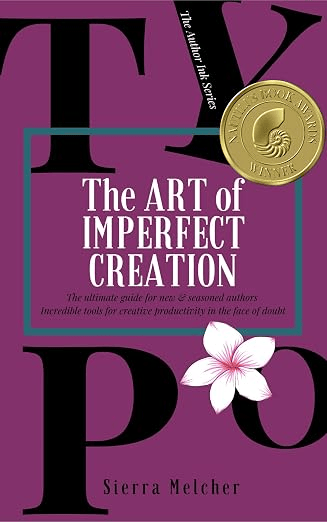
Recommended Books by Clients and Colleagues


_____________________________________________________
INDIVIDUAL RECOVERY. The symptoms of social anxiety make it challenging for some to participate in a collective workshop. Dr. Mullen works one-on-one with a select group of individuals uneasy in a group setting. ReChanneling offers scholarships to accommodate the costs. What is absent in group activities is provided in our monthly Graduate Recovery Group. In this supportive community, graduates interact with others who have completed the program. Contact ‘rmullenphd@gmail.com’
ReChanneling develops and implements programs to (1) reduce symptoms of social anxiety and related conditions and (2) pursue personal goals and objectives — harnessing our natural ability for extraordinary living. Our core approach focuses on personality through empathy, collaboration, and program integration, using neuroscience and psychology, including proactive neuroplasticity, cognitive-behavioral therapy, positive psychology, and techniques to rebuild self-esteem. All donations go toward scholarships for groups and workshops.