Recovery from Social and Performance Anxiety
and Related Conditions
Robert F Mullen, PhD
Director/ReChanneling
For each new subscriber, ReChanneling donates $25 for workshop scholarships.

_____________________________________________________
Upcoming Events
September 2026: Guest Blog – Wild Ink Publishing
October 21, 2026: Conversation with Ari Shapiro
October 22, 2026: 1,000 readers in Wanstead, England
October 21, 2026: Conversation with Ari Shapiro
PBS Public Media hosted by Jade Hindman, San Diego
October 28, 2026: 8,300 readers in San Diego, CA
October 29, 2026: 1,800 readers in St. Paul, MN
The Bobby Bones Show: various including TN and NJ
November 3, 2026: 3,200 readers in London
November 10, 2026: 1952 members in Pasadena
November 24, 2026: 1,200 readers in Branford, CT
TBD November 2026: 1767 readers in Liverpool

_____________________________________________________
Understanding Our Inherent
Resistance to Recovery
Resistance to recovery is common among people with social and performance anxiety. They deeply desire emotional stability, but psychological and physiological resistance can make that goal difficult to attain.
When we resist, we avoid, deny, project, and reject, shutting ourselves off from new opportunities. True recovery requires us to understand and overcome our resistance to change and take steps to implement it.
Physiological Resistance
We often think of resistance as purely emotional, but our brain’s metabolism plays a major role. Our brain’s inertia naturally resists change, and our basal ganglia make it hard to modify established behaviors. The basal ganglia are a group of brain structures that play a role in learning and emotional processing. Their resistance is why breaking habits—whether negative ones like smoking or positive ones like recovery—is so challenging.
Psychological Resistance
Psychologically, our inherent negativity bias leads us to focus more on negative expectations than positive ones, which can result in self-sabotage and inaction.
Negativity bias is the tendency to pay more attention to and give greater weight to negative experiences and information. Early civilizations lived in environments filled with dangers that posed immediate threats to life and limb. Quickly identifying and responding to negative stimuli was a crucial survival advantage.
Over time, this heightened sensitivity to negative events became ingrained in our automatic responses. We tend to respond more to experiential fears than to positive or neutral ones.
Established Failures
Our experience of failure, real or perceived, further fuels our resistance. A major symptom of social and performance anxiety is the expectation of adverse outcomes, coupled with an awareness of past inadequacy. We convince ourselves that nothing has worked before, and our learned hopelessness reinforces that belief.
So, what is the point, we ask ourselves.
How do we learn if we resist learning? How do we change if our fear of change is so overwhelming that we refuse to consider the possibility of healing?
The Cycle of Self-Sabotage
Consider the inner turmoil of the self-saboteur, who undermines their own recovery. This pattern is both learned and deeply destructive, reinforcing our doubts and disrupting our progress.
Let me give you a personal example.
As a young actor, I was on the Hollywood fast track. I failed my audition for The Young and the Restless because the competition intimidated me. When my agent secretly set me up with Norman Lear, who was looking for writers, I fled the meeting, thinking my presence was a mistake. I blew my audition for a major film because I was crashing from speed, and I alienated William Friedkin during a drunken lunch at Musso & Frank’s. I even had the honor of being ‘escorted’ off the Paramount lot.
I could go on, but you get the gist. I squandered every opportunity because my social anxiety made me believe I was a waste of space and destined for failure. I was a consummate self-saboteur. A self-saboteur engages in behaviors that invite failure and hinder success.

It is one of the best investments I have made in myself, and I will
continue to improve and benefit from it for the rest of my life. – Nick P.
_____________________________________________________
Nietzsche
In his book Beyond Good and Evil, Nietzsche wrote that “man is his own worst enemy because he has no other choice,” arguing that we are solely responsible for our actions and cannot blame external factors for our shortcomings. This view ignores our ingrained physiological resistance, our environment, and our childhood experiences, while denying us the choice to change our actions.
We can choose how we respond to challenges. We can choose emotional well-being and quality of life. The ability to choose wisely is the unshakeable gift that shapes our lives and guides our recovery.
Victimization
The term “suffer” is often used to describe our experience with social and performance anxiety. Phrases like “I suffer from social anxiety” are common, but they stem from a misunderstanding. The word “suffer” implies that we have no control over our condition, which is a flawed assumption.
Remember that our condition isn’t a life sentence; it is a challenge we can overcome with the right mindset and proactive steps.

Self-Fulfilling Prophecy
A self-fulfilling prophecy is a subjective expectation that shapes our behavior and often leads to the negative outcome we anticipate. When we expect the worst in social and performance situations, we set ourselves up for failure. We anticipate criticism or rejection, worry about embarrassing ourselves, and expect unpleasant consequences.
This self-destructive outlook leads us to lose heart and avoid steps that could yield more constructive outcomes.
Negative self-talk clearly reveals this pattern. Automatic negative thoughts such as “I’ll say something stupid,” “I’m not attractive enough,” “I’m not interesting,” and “I’m not good enough” reinforce our expectations of rejection and failure.
These harmful self-fulfilling beliefs have serious consequences. We avoid social interactions, shy away from closeness, criticize ourselves, and miss opportunities to build relationships.
By adjusting our expectations toward positive outcomes, we break free from the cycle of self-victimization. Instead of seeing ourselves as powerless and destined to fail, we recognize our innate capacity to transform.
This shift in perspective helps us move beyond self-defeating patterns and adopt a mindset that recognizes our true worth and potential.
When we project healthy, productive outcomes, we motivate ourselves to take the steps needed to turn those optimistic predictions into reality. This proactive approach builds confidence and resilience, empowering us to pursue our goals and create a more fulfilling life.
By focusing on positive possibilities, we create opportunities for personal growth and success rather than reinforcing negative expectations.
________________________________________________________

A Survivor’s Common Sense Approach
to Recovery from Social Anxiety
Buy Now and Review
To contribute to reader reviews on Amazon, you must have spent at least $50 on Amazon.com using a valid credit or debit card in the past 12 months.
If you don’t have a Kindle and find the $16.99 price of the paperback out of reach, the publisher allows us to email a copy of the book to anyone willing to post a review. Contact me at rmullenphd@gmail.com, and I will gladly send you a copy.
_____________________________________________________
Book Review
LETTERS TO A YOUNG POET
By Ranier Maria Rilke

I typically review books by colleagues and supporters. A student in one of our workshops shared that Rainer Maria Rilke’s Letters to a Young Poet profoundly supported many of the primary objectives of her recovery; thus, I include it here. This collection of ten letters, written to an aspiring young writer in 1929, offers a masterful reflection on Socratic reasoning and self-awareness.
Rilke’s concise, 33-page treatise offers guidance on living a meaningful and authentic life.
People experiencing social and performance anxiety are highly susceptible to criticism and evaluation by others.
Rilke advises us to explore our inner life and experiences rather than seek external validation, so we can develop and accept our own voice and connect authentically with others and the world.
He discourages reliance on criticism or public opinion. He encourages us to introspect and journal our thoughts and desires to ensure our expressions and beliefs are genuine, rather than simply adopting others’ thoughts and opinions.
He stresses that we must fully live and understand our experiences to express ourselves reliably and genuinely, and to draw inspiration from lived experience, nature, healthy relationships, and self-introspection. He believes we must recognize that all aspects of our life contribute to who we are and who we can become.
Rilke encourages us to embrace life’s uncertainties and cultivate resilience as we seek meaning. Our personal growth is inextricably linked to our experiences. Letters to a Young Poet is a timeless guide for anyone seeking insight into creativity, self-understanding, and the human condition.
_____________________________________________________
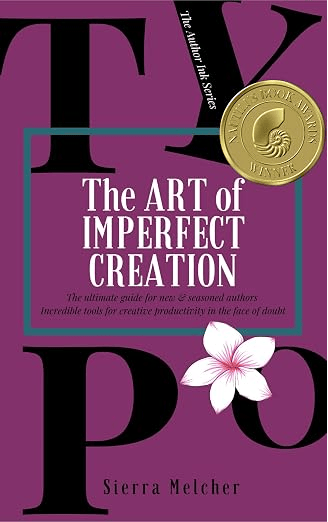
Other Recommended Books from Clients and Colleagues


_____________________________________________________
INDIVIDUAL RECOVERY. The symptoms of social anxiety make it challenging for some to participate in a collective workshop. Dr. Mullen works one-on-one with a select group of individuals uneasy in a group setting. ReChanneling offers scholarships to accommodate the costs. What is absent in group activities is provided in our monthly Graduate Recovery Group. In this supportive community, graduates interact with others who have completed the program. Contact ‘rmullenphd@gmail.com’
ReChanneling develops and implements programs to (1) reduce symptoms of social anxiety and related conditions and (2) pursue personal goals and objectives — harnessing our natural ability for extraordinary living. Our core approach focuses on personality through empathy, collaboration, and program integration, using neuroscience and psychology, including proactive neuroplasticity, cognitive-behavioral therapy, positive psychology, and techniques to rebuild self-esteem. All donations go toward scholarships for groups and workshops.