Recovery from Social Anxiety and Related Conditions
Robert F Mullen, PhD
Director/ReChanneling
For each new subscriber, ReChanneling donates $25 for workshop scholarships.
_______________________________________________________________

UPCOMING WORKSHOPS
Weds. Evenings: Sept. 16th – Nov. 19th.
Saturday mornings: Sept. 19th – Nov. 22nd
_______________________________________________________________
“This is one of the best books I’ve read about social anxiety disorder and how to recover from it.” – P.J. GUDKA, author of Perfect and All the Words I Kept Inside.
SEARCH OTHER RECENT TESTIMONIALS HERE.
_______________________________________________________________

A Survivor’s Common Sense Approach to Recovery from Social Anxiety
(Kindle: $9.99; paperback $16.99; hardcover $26.99.)
Purchase here.
_______________________________________________________________
Upcoming Seminars
October 14, 2026. 1,200 readers in Branford, CN.
October 29, 2026. 1,800 readers in St. Paul, MN


_______________________________________________________________
Reviews
To contribute to customer reviews on Amazon, you must have spent at least $50 on Amazon.com using a valid credit or debit card in the past 12 months.
If you don’t have a Kindle and find the $16.99 price of the paperback out of reach, the publisher allows me to email a copy of the book to anyone willing to post a review. Just reach out to me at rmullenphd@gmail.com, and I will send you a copy.
_______________________________________________________________
Labeling
Cognitive Distortion #9
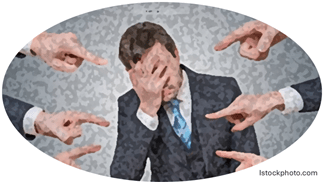
Labeling involves reducing individuals or groups to a few negative traits. It often results in dismissive or demeaning views based on isolated actions or conduct. This simplified approach can omit information that contradicts the label, leading to a distorted, biased portrayal.
Labeling can also be positive. However, due to the adversarial nature of social anxiety, our focus is on unhelpful and harmful labeling.
Negative labeling
Negative labeling can cause painful emotions, leading to resentment and hostility. When we label, we create 230 distance and stereotypes. “Because my husband can’t fix the dishwasher, he is useless.” “Because she won’t talk to me, I am sexually unattractive.” These labels not only limit us to perceived shortcomings but also cause serious emotional harm.
When We Label Others
Other labeling occurs when we brand others to compensate for our insecurities. For example, if we feel alienated at a party, we might label the other guests as rude or hostile. If our companions don’t provide the support we believe we are entitled to, we might label them disloyal. If our partner is critical of our behavior, we might label them demeaning or confrontational.
Consider the mental and emotional repercussions of labeling someone as mentally ill when they disclose a therapeutic relationship. Or labeling someone unattractive because they don’t meet our myopic standards of desirability.
Labeling can be emotionally exhausting for those of us with social anxiety when our symptoms cause others to label us. For example, being called ‘awkward’ or ‘weird’ due to communication difficulties can reinforce negative self-views, heighten our anxiety, and undermine our self-esteem.
Self-Labeling
Reflect on the emotional damage we cause when we label someone as ignorant, incompetent, stupid, cowardly, worthless, or ugly. Now consider the effect on our own emotional well-being when we use these words to describe ourselves, driven by self-judgment reinforced by our social anxiety.
Personal labeling (self-labeling) is assigning negative tags to reinforce our negative view of ourselves. We know how upsetting it feels when someone labels us negatively.
When we engage in personal labeling, we reinforce feelings of inferiority and inadequacy. Labeling ourselves with negative terms is obviously counterproductive and worsens our anxiety and depression. It leads to thoughts and actions that reinforce that label, creating a cycle of negative self-perceptions that deepen our insecurities.
Questioning Labeling
Labeling someone or a group arbitrarily based on isolated incidents or behaviors doesn’t reflect their true character and can be hurtful and biased.
Instead of focusing on the specific element or bias that led to the label, it is important to recognize the person’s or group’s positive contributions. We should treat everyone with compassionate understanding.
For example, instead of labeling someone as ‘aloof’ or ‘arrogant,’ we might see their behavior as signs of shyness or anxiety. Rather than giving an unfair label, it’s more compassionate and honest to try to understand the reasons behind their actions or discomfort.
Our preconceived notions often stem from bias, disinformation, or unconscious projections. It’s important to question these assumptions when we feel the urge to label someone based on how they look or act. Why do we think this way? What motivates us to describe someone by a specific trait? By examining our assumptions, we can develop a better understanding and avoid the pitfalls of labeling.
Focusing on Constructive Behaviors
We are much more than just a label. We are unique individuals with diverse backgrounds, beliefs, idiosyncrasies, needs, desires, and concerns.
Reflect on the damage of labels and their impact on individuals. How does being labeled affect us? We abhor being judged and criticized. Why would we do the same to others? Why would we do it to ourselves?
Instead of labeling, it is more courageous and honest to focus on a person’s or group’s positive, constructive behaviors. By recognizing and valuing their contributions, motivations, and other strengths, we build a more compassionate and relatable relationship. It is always easier to label than to try to understand.
_______________________________________________________________
Recommended Books from Clients and Subscribers (add yours)


“What I found especially compelling is that your approach appears to come not only from professional understanding, but from lived experience. The fact that you have personally faced severe social anxiety and built a recovery framework from that experience gives the book a level of authenticity that readers are likely to find both reassuring and credible.” – James Blackstone

ReChanneling develops and implements programs to (1) reduce symptoms of social anxiety and related conditions and (2) pursue personal goals and objectives — harnessing our natural ability for extraordinary living. Our core approach focuses on personality through empathy, collaboration, and program integration, using neuroscience and psychology, including proactive neuroplasticity, cognitive-behavioral therapy, positive psychology, and techniques to rebuild self-esteem. All donations go toward scholarships for groups and workshops.
“I am simply in awe at the writing, your insights, your deep knowing of transcendence, your intuitive understanding of psychic-physical pain, your connection of the pain to healing, your concept/title, and above all, your innate compassion.” – Janice Parker, PhD
INDIVIDUAL RECOVERY. The symptoms of social anxiety make it challenging for some to participate in a collective workshop. Dr. Mullen works one-on-one with a select group of individuals who are uneasy in group settings. ReChanneling offers scholarships to accommodate the costs. What is absent in group activities is provided in our monthly Graduate Recovery Group. In this supportive community, graduates interact with others who have completed the program. Contact ‘rmullenphd@gmail.com’.