Recovery from Social Anxiety and Related Conditions
Robert F Mullen, PhD
Director/ReChanneling
For each new subscriber, ReChanneling donates $25 for workshop scholarships.

_____________________________________________________
Upcoming Events
September 2026: Guest Blog – Wild Ink Publishing
October 14, 2026: 1,200 readers in Branford, CN.
October 22, 2026: 1,000 readers in Wanstead, England
October 23, 2026: Conversation with Ari Shapiro
October 28, 2026: 8,300 readers in San Diego, CA
October 29, 2026: 1,800 readers in St. Paul, MN.
TBD: 3,200 readers in London
TBD: The Bay, hosted by Mina Kim; KQED 88.5 FM, San Francisco

_____________________________________________________
Devising Rational Coping Statements
Coping mechanisms are tools that enable us to manage our emotions, alleviate anxiety, and navigate stress. They encompass a wide range of strategies, from learned skills like distractions and visualization to natural responses such as hiking or listening to music.
Cognitive coping mechanisms enable us to craft rational responses to irrational thoughts, while behavioral coping mechanisms equip us with the means to adjust our actions.
Among the many coping mechanisms, three stand out for their effectiveness in situations where we anticipate fear—that is, those scheduled in advance that we project will trigger stress and anxiety. These can be single events, such as a job interview or a social gathering, or recurring ones, like a daily or weekly class or work environment.
In contrast, unexpected situations catch us off guard, bringing stress-provoking incidents like a plumbing failure, an unexpected guest, or missing house keys.
Three Effective Coping Mechanisms
Three effective coping mechanisms are grounding, which involves redirecting our anxiety into present-moment awareness; cognitive reframing, where we consciously choose to see a circumstance in a more positive light; and rational coping statements, which are logical, self-affirming statements aimed at counteracting automatic negative thoughts (ANTs) that arise in fear situations.
Once we have learned and practiced the nuances of cognitive reframing and grounding, we can apply them almost spontaneously, during any fear situation. On the other hand, rational coping statements are most effective when explicitly prepared for an anticipated fear situation.
This writing outlines the process of devising rational coping statements in anticipation of fear-inducing situations. Cognitive reframing and grounding will be covered in the following weeks.
Automatic Negative Thoughts
Automatic negative thoughts (ANTs), also called negative automatic thoughts (NATs), are the immediate, involuntary, anxiety-provoking thoughts that pop into our heads when we are in a fear-inducing situation.
ANTs are irrational assumptions rooted in our negative core and intermediate beliefs, as well as the self-defeating symptoms of our condition. For example, automatic negative thinking during a fear situation might include phrases such as, ‘I will be rejected,’ ‘No one will talk to me,’ ‘I don’t belong here,’ and ‘I am not undesirable.’
By challenging these ANTs with reason and positive self-validation, we can regain control and prevent them from dictating our actions. This is the power of rational coping statements.
Rational Coping Statements
Rational coping statements are logical, self-affirming responses to our situational fears, anxieties, and automatic negative thoughts. For instance, if we are afraid of rejection, a rational coping statement might be, ‘I belong here as much as anyone,’ ‘I am valuable and significant,’ or ‘I am approachable and likeable.’
These statements are designed to directly counteract the negative thoughts and feelings provoked by our negative self-appraisal. Essentially, they are provisional, positive personal affirmations designed for anticipated fear situations.
Rational coping statements are accurate, self-affirming responses to our unreasonable, self-defeating thoughts. Remember, our fears and anxieties are not real. They may feel real, but that is a cognitive distortion called emotional reasoning, which involves forming judgments and decisions based solely on our emotions, disregarding evidence to the contrary.
Anxiety is an abstraction; it has no power on its own. We create and feed it, making it real and giving it strength and power.
The first step in managing our ANTs is to recognize that our fears are not based on facts, but assumptions rooted in our past experiences, imagination, and reactions to perceived threats. A horror flick may stimulate our terrors, but they are alleviated once we leave the movie house. The power of our trepidations lies in our acceptance of them as reality rather than perception.
It’s not the fears that adversely impact our emotional well-being; it’s the things we do to avoid them. Our goal in recovery is to eliminate the anxiety responsible for the expression of the ANT by examining and analyzing its causes. Since the fear is irrational, logic dictates that the corresponding ANT is also. Thoughts such as ‘I don’t belong here’ and ‘I am not welcome’ are subjective projections.
The following strategy is designed to help us develop rational coping statements to counteract our ANTs.
Steps to Devising Rational Coping Statements
- Identify Our Fear Situation
- Identify Our Associated Fear(s)
- Unmask Our Corresponding ANT(s)
- Examine and Analyze the Cause(s) of Our Associated Fear(s) and Corresponding ANT(s)
- Generate Rational Coping Statements
Fear Situation
First, we identify the anticipated fear situations that provoke our fears. Where do we feel anxious or fearful? What activities are we engaged in, and what thoughts arise? Is it a networking event, speaking in front of the class, a social engagement, a family dinner, or a trip to the public swimming pool? They’re different for everyone. Most of us have multiple fear situations.
Associated Fears
Next, we unpack the actual fears associated with the fear situation. What is problematic for me during this fear situation? How do I feel (physically, intellectually, emotionally, spiritually)? What activities are we engaging in? What is being said? What’s the worst outcome we project happening? What might occur?
Corresponding ANTs.
Then, we unmask our corresponding ANTs. What do we tell ourselves when triggered? How do we perceive ourselves in these moments? What are our self-defeating responses to these triggers?
Examine and Analyze Our Associated Fears and Corresponding ANTS
We know our fears and ANTs are irrational and self-destructive reflections of our negative self-appraisal. By examining and analyzing the reasons behind them, we view them in the context of the situation. Are they practical? Are they real or false assumptions? How would a confident, self-assured individual respond to them?
Devise Rational Coping Statements
Finally, we devise our rational coping statements. This is a relatively simple process. We respond to our irrational, automatic negative thoughts by devising reasonable, logical, self-supporting, and empowering statements.
Eventually, we will confront our fear situation in real life. This happens once we have resolved and practiced steps 1-5, and after a suitable period of graded exposure. i.e., gradually reducing the intensity of our fears and anxieties in a workshop environment and through external exercises.
________________________________________________________

A Survivor’s Common Sense Approach to Recovery from Social Anxiety
(Kindle: $9.99; softcover $16.99; hardcover $26.99.) Amazon
Alternative Review Options
BookBub / Goodreads / Tertulia / Storygraph
“This is one of the best books I’ve read about social anxiety disorder and how to recover from it.” P.J. Gudka, author of Perfect and All the Words I Kept Inside.
To contribute to reader reviews on Amazon, you must have spent at least $50 on Amazon.com using a valid credit or debit card in the past 12 months.
If you don’t have a Kindle and find the $16.99 price of the paperback out of reach, the publisher allows us to email a copy of the book to anyone willing to post a review. Contact me at rmullenphd@gmail.com, and I will gladly send you a copy.
______________________________________________________

Register for our January 2027 Workshops
It is one of the best investments I have made in myself, and I will continue to improve and benefit from it for the rest of my life. – Nick P.
______________________________________________________
BOOK REVIEW
Breathing Lessons
By Anne Tyler
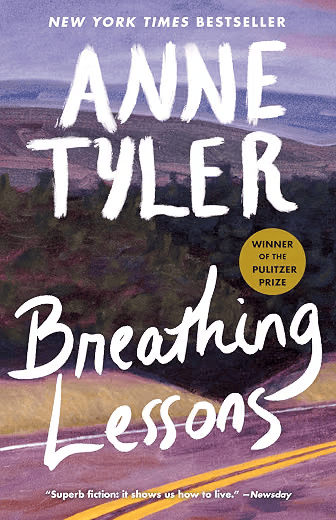
A Pulitzer Prize-winning novel does not suffer from a lack of reviews. When Anne Tyler initiated a conversation about my book, I was dismayed to learn how little I knew of her work. I was majoring in philosophy and religion in 1989, when she won the Pulitzer, and I didn’t have the time or resources to read fiction. However, I did see The Accidental Tourist, the acclaimed film of one of her earlier works of fiction.
Anne Tyler has written 20 books, including Breathing Lessons, which is so astoundingly perceptive, comic, and real that I had to bring it to the attention of any reader asleep in the 80s.
A middle-aged Baltimore couple attends the funeral of the wife’s friend. Her husband is less than responsive, but they have been a committed couple for decades, creating a very American dysfunctional family.
Breathing Lessons explores marital relationships, old friendships, and the common discord that accompanies long-term intimate alliances.
The novel follows Maggie and Ira Moran, a middle-aged Baltimore couple, as they drive 90 miles to attend the funeral of the husband of Maggie’s best and oldest friend, Serena.
The banter and miscommunication among Tyler’s characters are both reassuring and uncomfortable. Because of their early separation, I don’t remember my parents’ bickering, but it is front and center and often quite humorous during the Morans’ car ride.
So, suspend your preconceptions about what constitutes a viable marriage, and dig deep to understand the love that underlies the intentionally insipid and consciously brilliant dialogue.
The book is engaging, astute, and often downright hilarious as it describes ordinary people’s lives on an ordinary day in ordinary situations. The dialogue initially seems mundane and picayune until you put yourself in the back seat of their car, filled with faded memories, wishful thinking, and real-life absurdity. Breathing Lessons is filled with brilliant character studies of average, middle-aged folks who have settled into their lives, for better or worse.
Breathing Lessons is a phenomenal character-driven book that brings readers into a day in the life of some very common people who turn out to be uncommon under the author’s impeccable direction and narrative. A must-read for anyone who demands honest dialogue, amusing anecdotes, and real people. The characters may seem like failures, but their relationships and experiences amount to much more.
Breathing Lessons is a brilliant, enjoyable ride.
_____________________________________________________
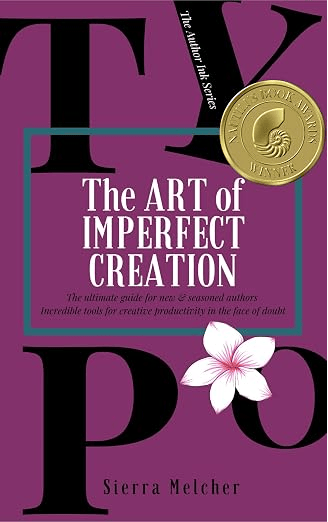
Other Recommended Books from Clients and Colleagues


_____________________________________________________

ReChanneling develops and implements programs to (1) reduce symptoms of social anxiety and related conditions and (2) pursue personal goals and objectives — harnessing our natural ability for extraordinary living. Our core approach focuses on personality through empathy, collaboration, and program integration, using neuroscience and psychology, including proactive neuroplasticity, cognitive-behavioral therapy, positive psychology, and techniques to rebuild self-esteem. All donations go toward scholarships for groups and workshops.
INDIVIDUAL RECOVERY. The symptoms of social anxiety make it challenging for some to participate in a collective workshop. Dr. Mullen works one-on-one with a select group of individuals uneasy in a group setting. ReChanneling offers scholarships to accommodate the costs. What is absent in group activities is provided in our monthly Graduate Recovery Group. In this supportive community, graduates interact with others who have completed the program. Contact ‘rmullenphd@gmail.com’.
Concise, practical and effective. Thank You!
Rick. I appreciate your comments and observations.